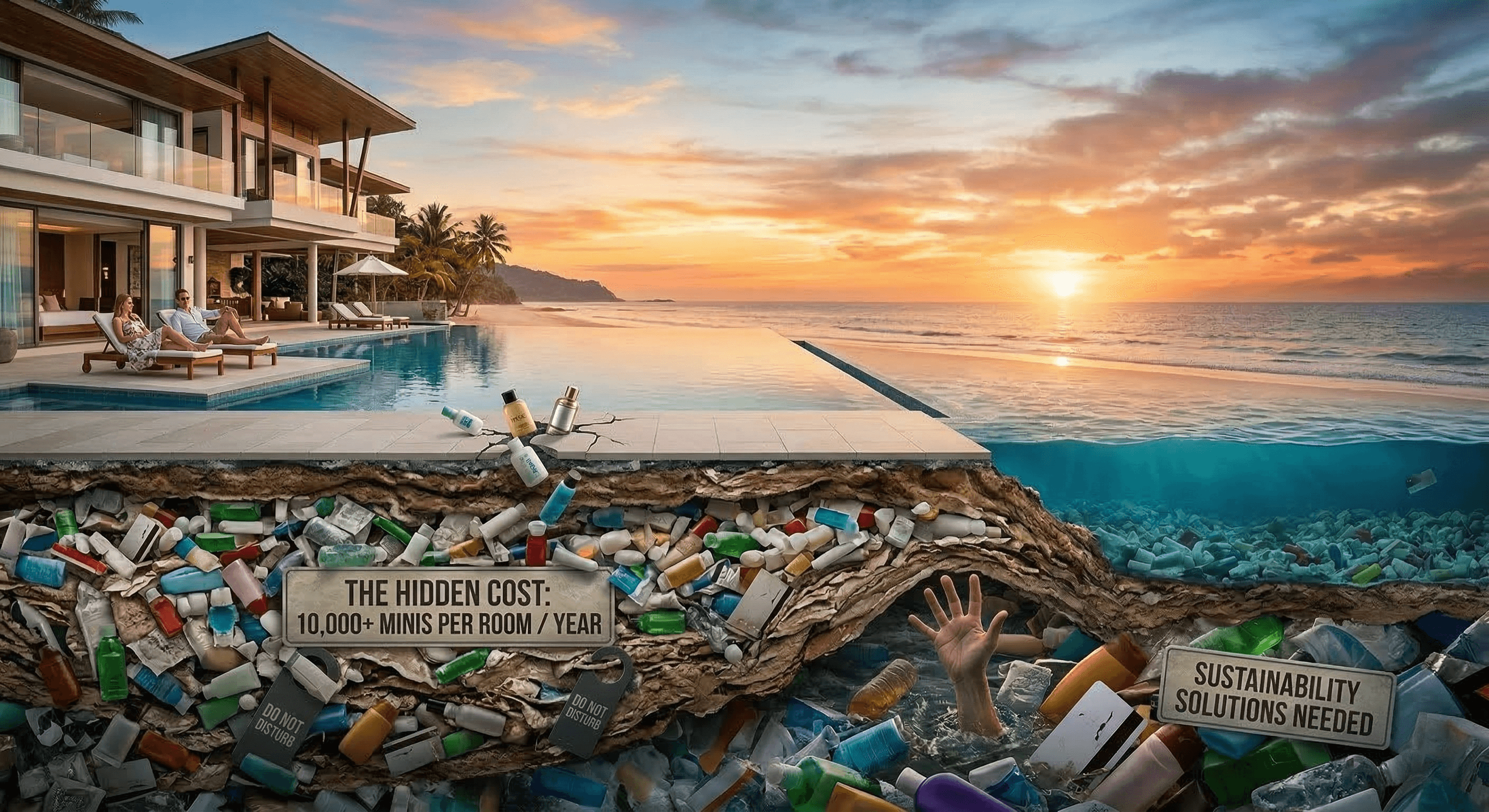
The Hidden Cost of Our Vacations: The Environmental Impact of the Hospitality Industry
The global tourism and hospitality industry provides us with unforgettable experiences, luxurious escapes, and vital economic growth. However, behind the pristine hotel rooms and infinity pools lies a heavy environmental cost that can no longer be ignored. According to data from the UN Environment Programme (UNEP), the tourism sector is responsible for producing millions of tons of solid waste annually, with plastic pollution being one of the most severe offenders.
One of the primary culprits in this crisis is the deeply ingrained "use-and-toss" culture found in almost every hotel bathroom. Those tiny, aesthetically pleasing bottles of shampoo, conditioner, and body wash are typically used once or twice before being discarded. Because of their size and the mixed materials used to make them, these miniature bottles are notoriously difficult—often impossible—to recycle. They accumulate by the billions in landfills and oceans every single year.
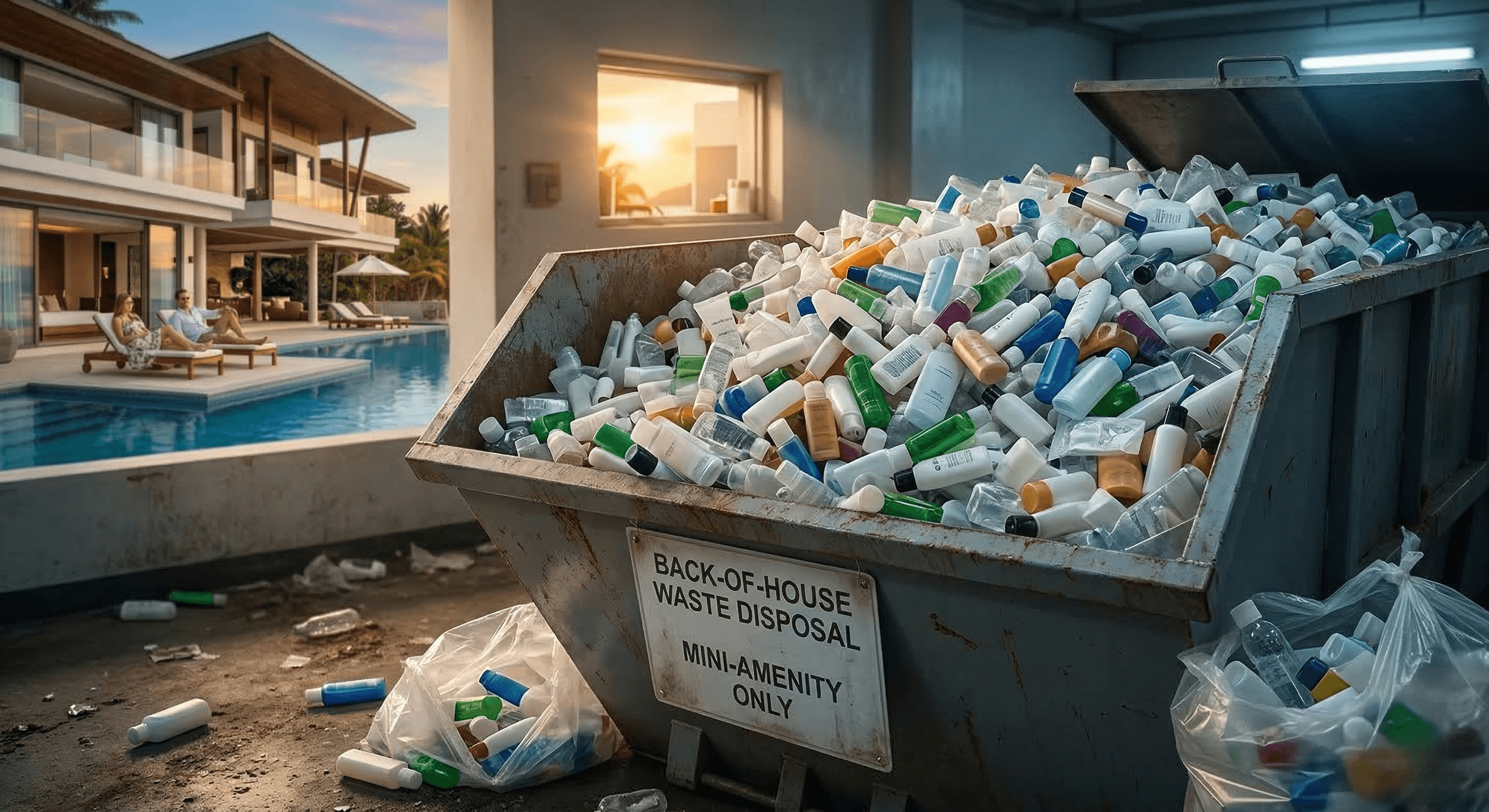
But the physical plastic is only half the problem. The hidden carbon footprint of traditional amenities is staggering. Because standard liquid personal care products consist largely of water, they are incredibly heavy. Shipping millions of liters of water across the globe demands massive amounts of fuel, significantly increasing greenhouse gas emissions.
If the hospitality industry wants to secure its future and protect the beautiful destinations that draw travelers in the first place, it must pivot. The transition toward a circular economy is no longer optional; it is essential. Hotels must adopt innovative solutions that stop waste before it is even created, ensuring that the footprint we leave behind is nothing more than footprints in the sand.